Economy and Real Estate Market in Chile April 2025
In April 2025, the real estate and agricultural land market in Chile presents a mixed outlook, marked by challenges in access to financing and regulatory uncertainty, but also by emerging opportunities in sustainability, digitalization, and a growing demand in the rental market.
General Economic Context
The Chilean economy shows signs of moderate recovery. The Central Bank projects GDP growth between 1.5% and 2.5% for 2025, driven by increased public spending and a rebound in the external sector, although this is offset by lower household and business spending.
The annual inflation is expected to close this year at 4.8%, decreasing to 3.6% in 2025, and reaching the target of 3% by early 2026.
The Central Bank has maintained the key interest rate at 5% to balance inflationary pressures and support economic recovery.
Real Estate Market: Between Restrictions and Adaptations
Mortgage Financing: The Major Bottleneck
Access to mortgage financing remains a challenge. Currently, only 17% of households in Chile can access a mortgage loan, due to high interest rates and greater bank requirements.
The application of VAT on home sales continues to put pressure on prices, especially in new projects, affecting buyers and the pace of investment in new developments.
Digitalization and Sustainable Construction
The sector has begun to transition towards more efficient models. The use of digital tools for buying and selling, property management, and promotion has increased. At the same time, there is a rise in the construction of sustainable housing, incorporating energy efficiency systems, in response to greater environmental awareness among consumers and more stringent regulations.
Rise of Rentals
The inability to buy has led many families to turn to rentals. An increase of between 3% and 5% in rental prices is projected for 2025, especially in well-connected urban areas with good infrastructure and services. This trend also drives the development of residential rental projects (multifamily), particularly in Santiago and metropolitan regions.
Prospects 2025: What to Expect?
A slight reactivation of the real estate market is anticipated during the second half of 2025, especially in new apartments, driven by potential government incentive measures, subsidies for mortgage payments, and an expected decrease in interest rates.
Agricultural Land Market: Revaluation and New Configuration
The agricultural land market in Chile has shown notable revaluation over the past decade. According to an analysis by Colliers, rural land prices have increased an average of 45% in the last ten years, driven by the expansion of the agricultural sector, renewable energy projects, and the scarcity of available urban land.
Fiscal Revaluation: Pressure on the Agricultural Sector
Starting January 1, 2024, Chile has experienced a significant increase in the value of agricultural properties, with an average increase of 44% in the fiscal valuation of these properties. This process has raised concerns among farmers, who now face higher tax burdens in an already challenging economic context.
Subdivisions and Land Fragmentation
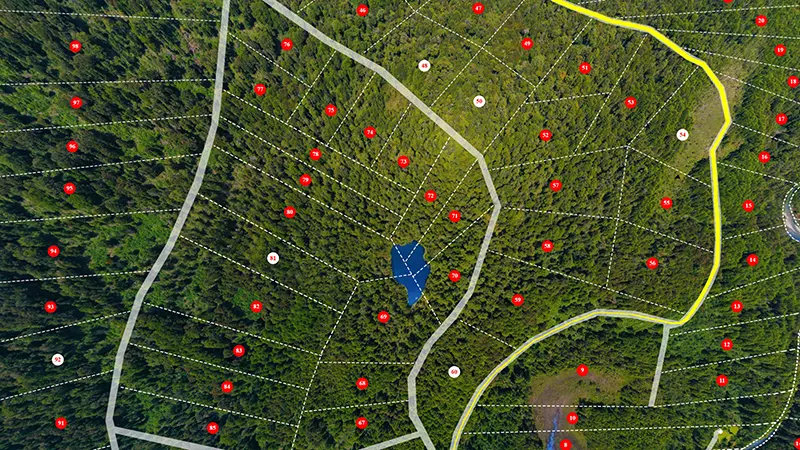
There has been a trend towards subdividing agricultural land into smaller plots. Nationally, 80.1% of the new registrations from 2008 to 2023 correspond to lands smaller than five hectares, reflecting a process of land atomization. This phenomenon is more pronounced in the Maule and Biobío regions.
A Phase of Adjustments and New Opportunities
The current outlook of the real estate and agricultural market in Chile in April 2025 faces significant challenges, but also shows signs of adaptation and resilience. The combination of effective public policies, technological innovation, and a focus on sustainability will be key to overcoming current obstacles and seizing emerging opportunities in both sectors.