

History of Calbuco
Calbuco, located in the Los Lagos Region in southern Chile, is a city and commune with a rich historical history. It is considered the oldest city in the province of Llanquihue, with origins dating back to the colonial era. Its traditional foundation is established on May 4, 1602, when the Spanish colonizers established Fort San Miguel de Calbuco. This fort was strategically raised in the Calbuco archipelago by Spanish troops fleeing after the destruction of Osorno during the great indigenous insurrection of 1598. At that time, Calbuco was part of the jurisdiction of Chiloé, to whose province it belonged administratively from 1602 to 1861. This close historical relationship with Chiloé left deep traces of local identity, sharing cultural and religious traditions.
During the colony, Calbuco was consolidated as a military square and starting point for expeditions to southern territories. At the end of the 17th century the town already had a church (built in 1620) and a small garrison, serving as a guard on the northern border of the Chilean territory. In 1866, the waters of Calbuco were the scene of the Abtao Naval Combat, an episode of the Spanish-South American War in which Chilean-Peruvian forces faced the Spanish squadron near Huapi Abtao Island. After the creation of the province of Llanquihue in 1861, Calbuco was incorporated into this new province, separating administratively from Chiloé and affirming its role within the continental region.
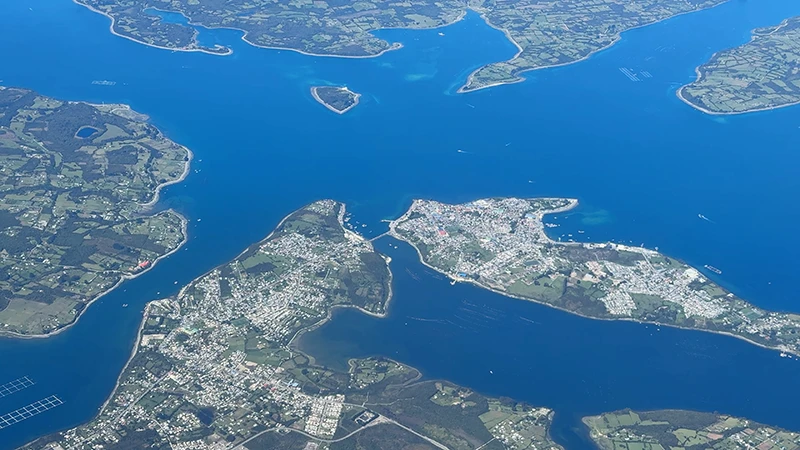
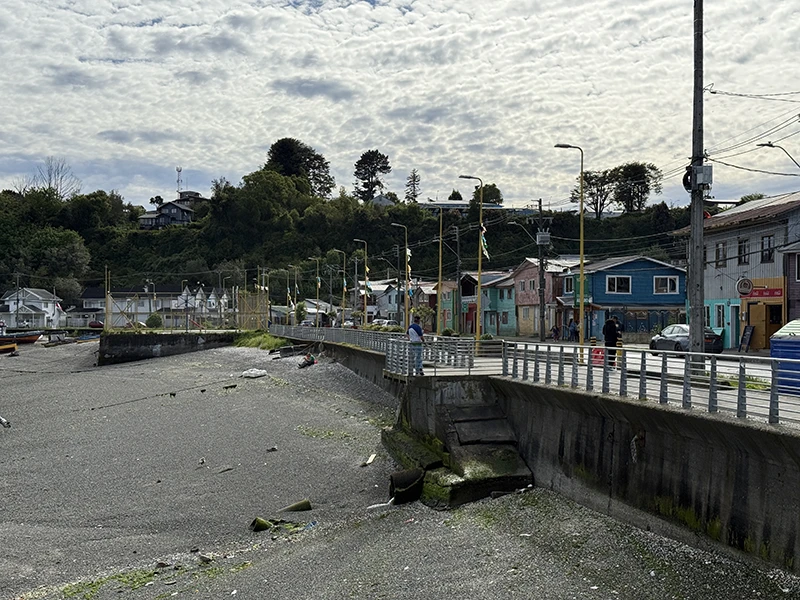
As early as the 20th century, the city faced one of its most difficult moments with the 1943 fire, which consumed the 12 main blocks of the city centre, becoming the worst catastrophe recorded in local history. Despite this tragedy, Calbuco was able to rebuild himself by preserving his traditional essence. A positive and decisive milestone for the community was the construction of the Calbuco stone, opened on 15 May 1966, which brought together the island of Calbuco with firm land. This 240-meter-long road connected the island city to the continent by road, greatly improving Calbuco’s connectivity with the rest of the region. Since then, Calbuco has ceased to rely exclusively on maritime routes for its main communication, facilitating the transport of people and goods.
Today, with more than 33,000 inhabitants (2017 census) and more than four centuries of life, Calbuco is a proud commune of its historical heritage. Its streets and traditions reflect the mix of Hispanic and indigenous influences of the colonial era, as well as the resilience of its inhabitants who have been able to overcome fires and geographical isolation. The history of Calbuco beats in its monuments and celebrations, providing a unique context for those who visit or choose to live in this southern corner.
Natural environment and tourist attractions
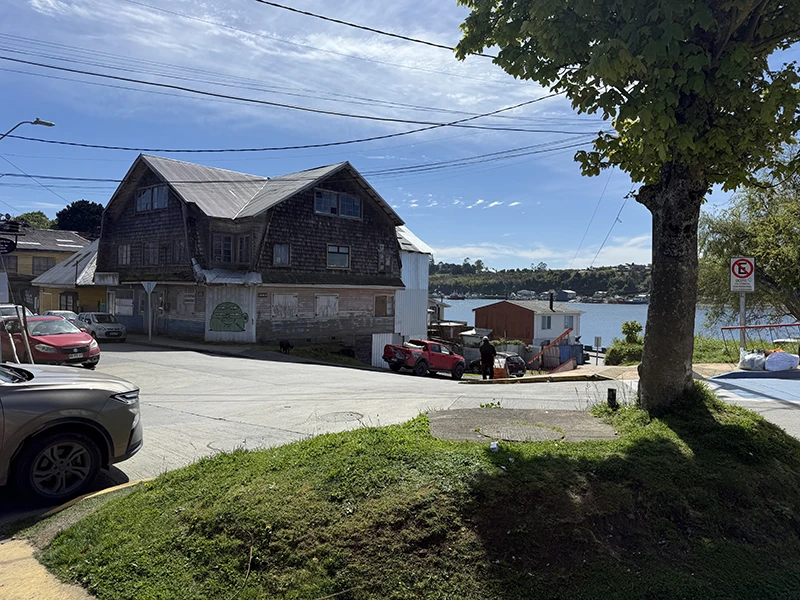
Calbuco offers a privileged and picturesque natural environment. It is actually an archipelago composed of 16 islands scattered in the inner waters of the Seno de Reloncaví. The island Calbuco is the main of them and on it is the urban center of the commune. Since 1966, this island has been linked to the continent by the said pedraplen, by which it runs the road access route. Other important islands of the archipelago are Puluqui, Huar, Quenu, Huapi Abtao, Chaullin (Helviena), Caicué (Lagartija), among others. Two of these islands have a land connection: in addition to Calbuco, the island Quihua is also connected to the continent by a pebble, while the rest keep its island character accessible only by sea.
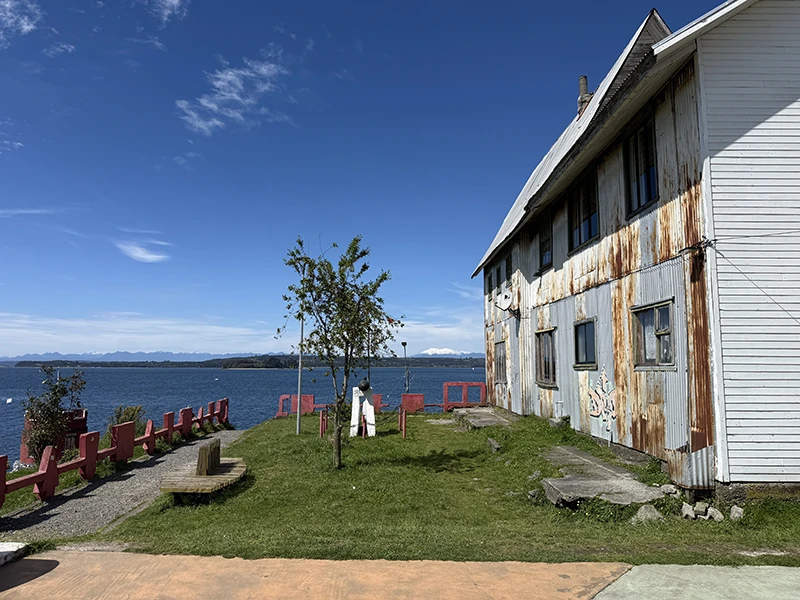
Located in the heart of the Los Lagos Region, Calbuco is surrounded by sea everywhere and blessed with spectacular views. The name Calbuco comes from the Mapudungun and means “blue water,” a poetic reference to the intense blue tones of its seas and channels. The landscape combines the island relief with the proximity of the Andes range: on clear days you can admire majestic volcanoes on the horizon, such as the imposing Calbuco Volcano (which gives name to the city) and the Yates Volcano, both visible from the Calbucan coast. The climate of the area is humid ocean temperate, typical of the Chilean island south. The rainfall is abundant (around 2,600 mm a year), which ensures an environment of evergreen forests and green meadows throughout the year. The temperatures are moderate, with fresh summers and cold-tempered winters, features that give the landscape a clean and country atmosphere.
Calbuco’s natural heritage includes well-preserved coastal wetlands and native forests. For example, the commune protects urban wetlands such as Caicaén and Pargua, and houses shrines of island nature, including Kaikué- Lagartija Island, known for its colony of Magellan penguins and other marine birds. The Helviña Island (Chaullin), for its part, stands out for a forest of arrayans (Luma apiculata) of great scenic beauty, attractive for ecotourism excursions. The surroundings of Calbuco also offer wonders such as the nearby Alerce Andean National Park, with millennia of alerce forests, and the vast Llanquihue Lake a little further north – both renowned tourist destinations in the region.
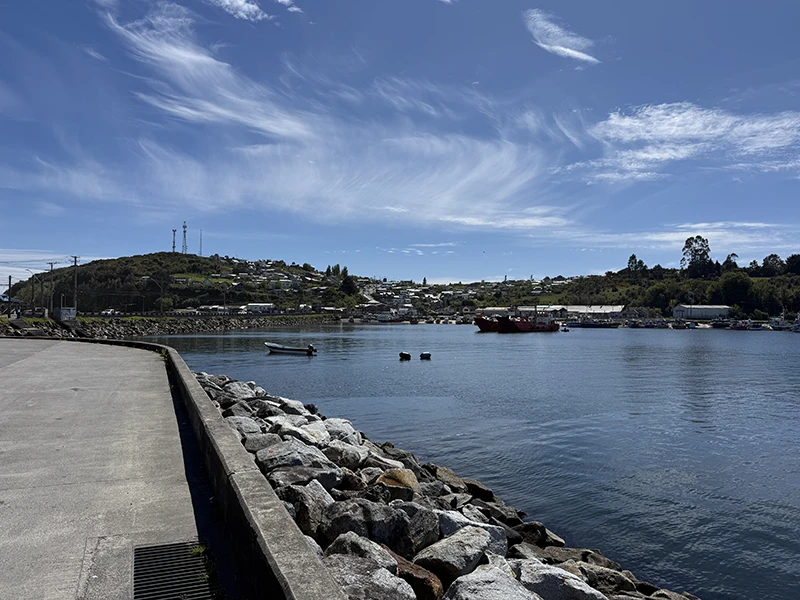
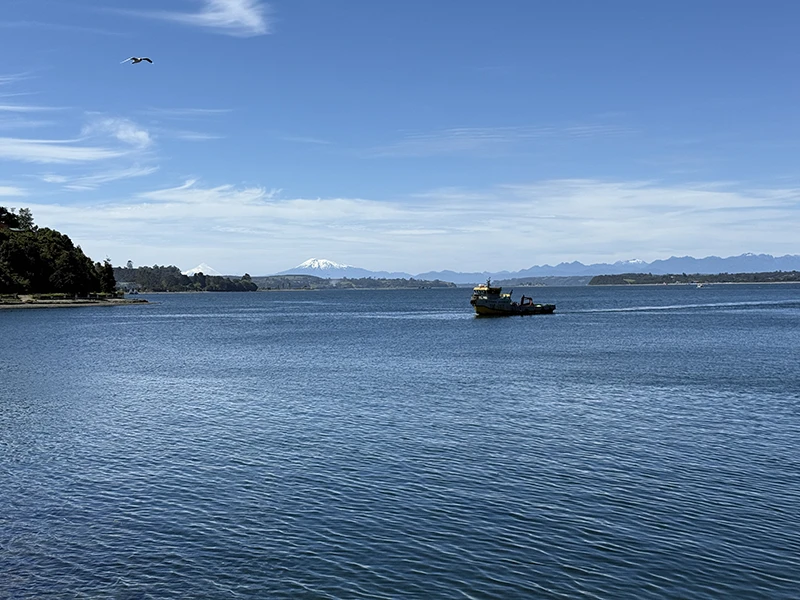
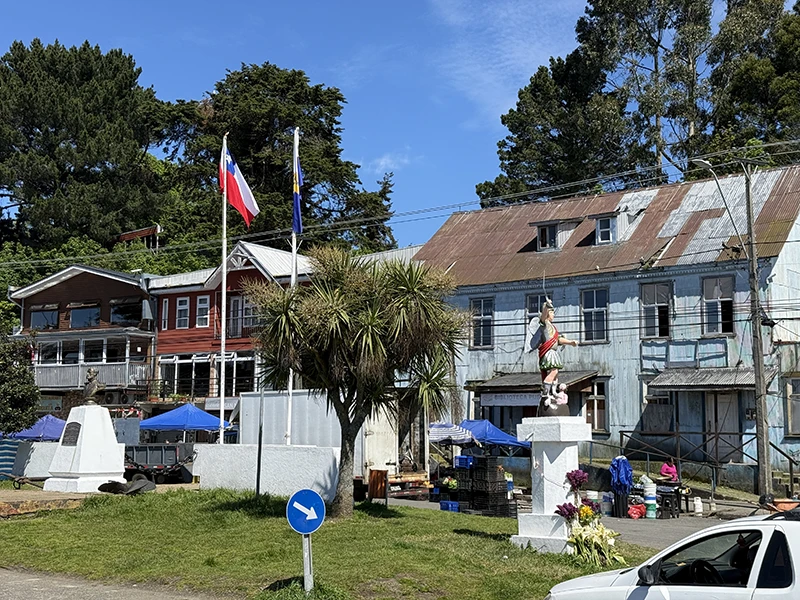
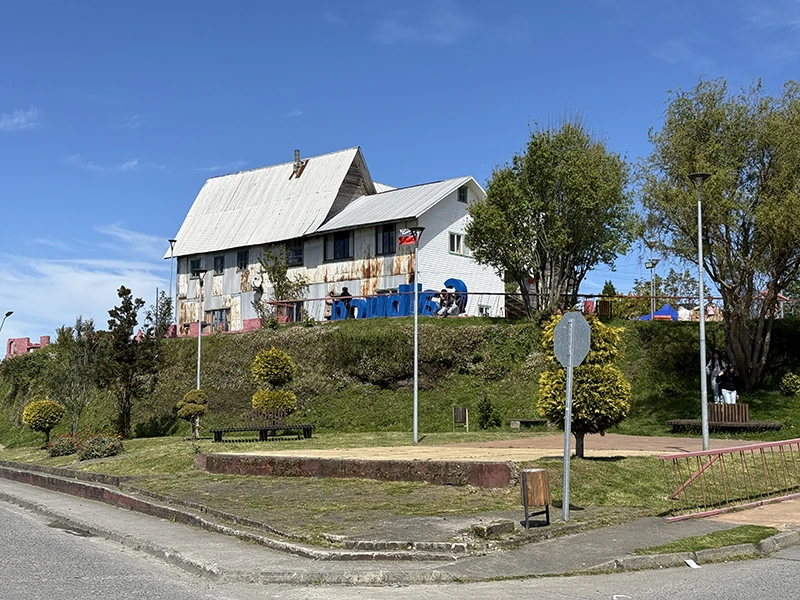
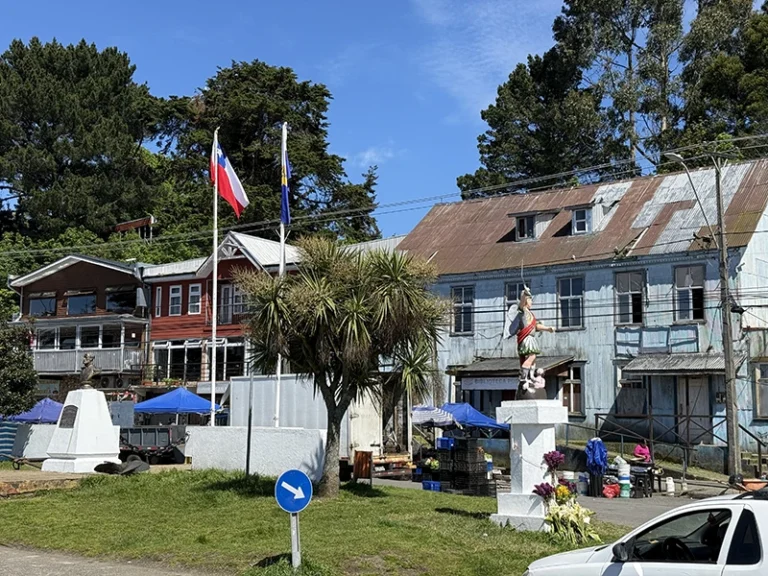
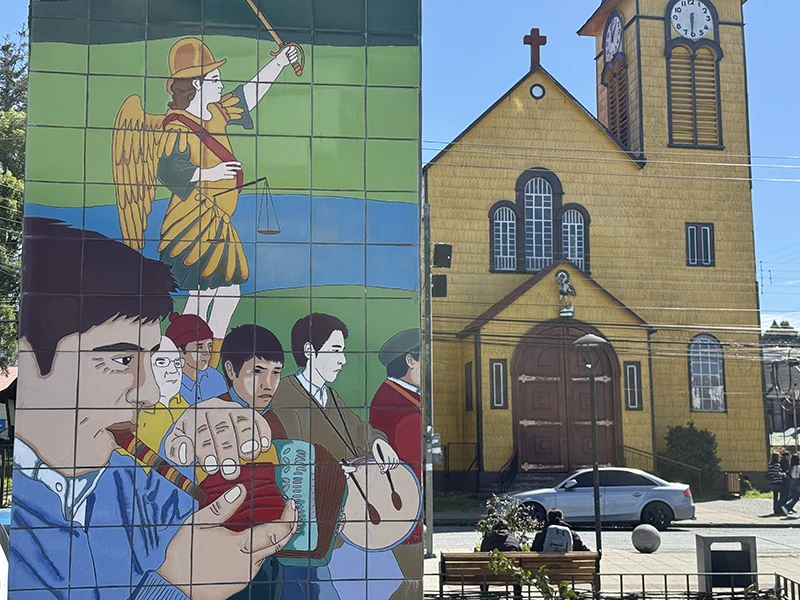
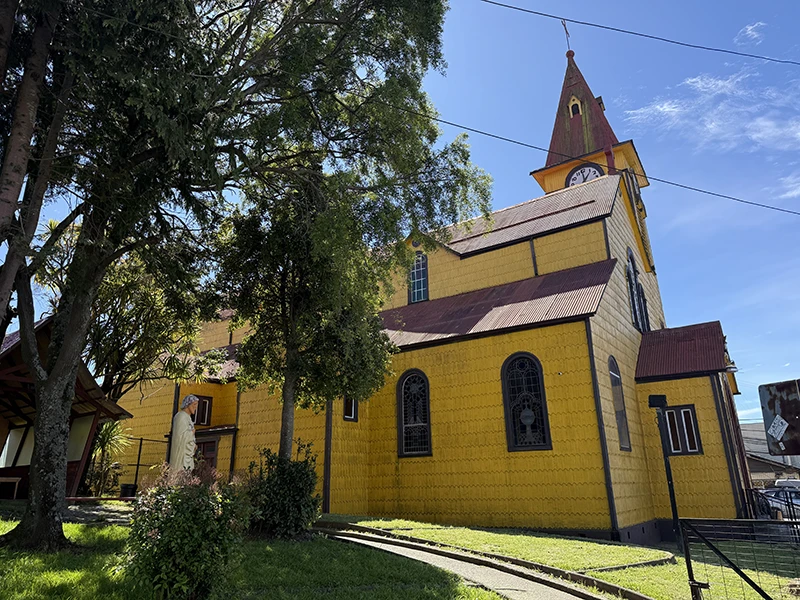
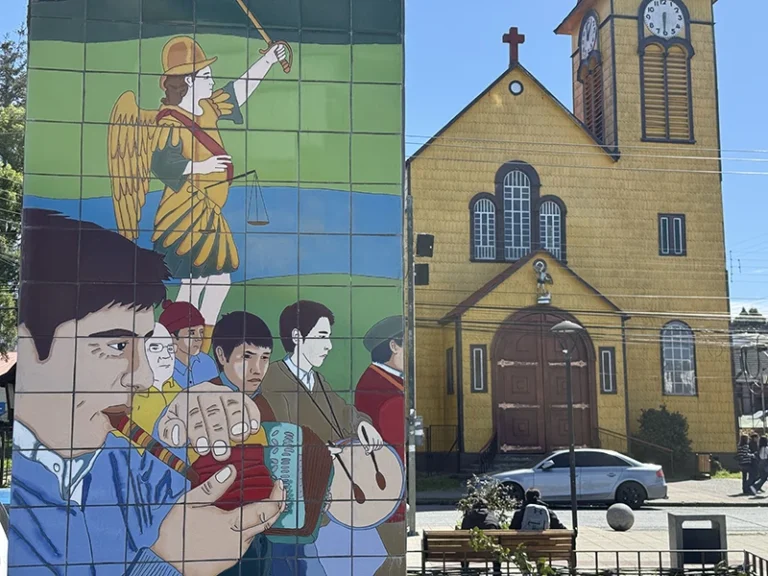
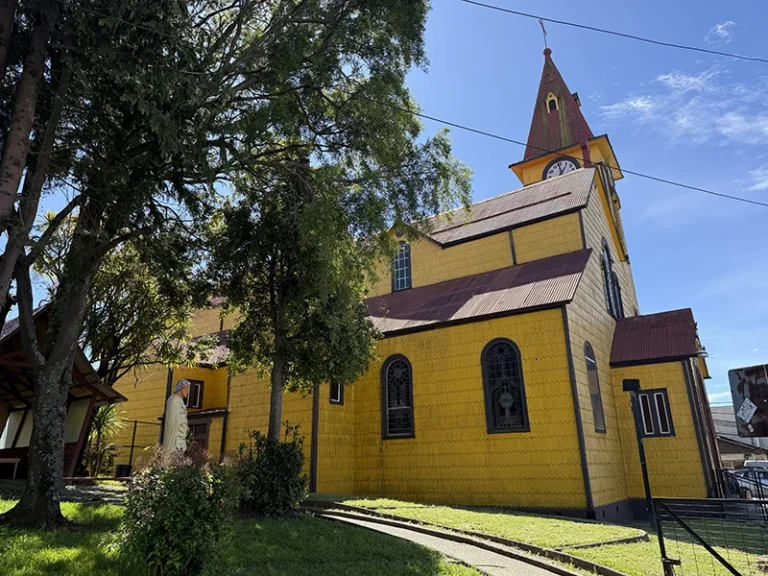
As for tourist attractions, Calbuco combines history, culture and nature in equal measure. In the urban centre is the Church of San Miguel Archangel, a parish temple built in 1935 that cherishes a centenary image of San Miguel brought by the Spaniards in the 17th century. This church, located in front of the Plaza de Armas, is part of the remarkable architectural tradition of Chiloé: in fact, Calbuco has 22 churches and wooden chapels recognized within the Chilean School of Religious Architecture in Madera, being the commune with the most such constructions throughout Chile. The Plaza de Armas is a meeting point, not only because of its historical value but because it acts as a natural viewpoint towards the bay, allowing to appreciate the nearby islands and the volcanic summits in the distance.
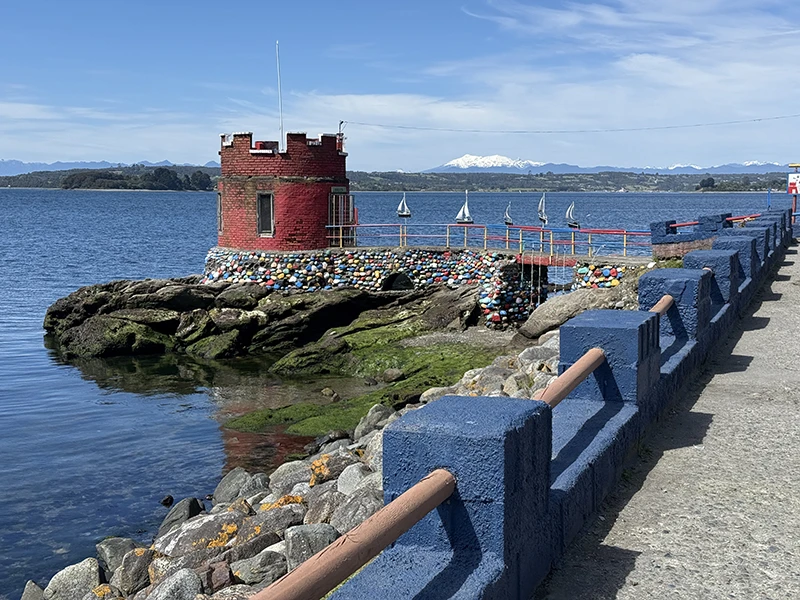
Very close to the square is the Municipal Museum of Calbuco, which exhibits pieces and stories about local history and identity. Next to the museum, in the historical sector of La Picuta, the site where Fort San Miguel was held is preserved. There can be seen an old colonial canyon and a symbolic turret built in 1982, which reflects the colonial military presence; in that turret, typical crafts are also sold, making the visit a complete cultural experience. Another picturesque place is the Municipal Market and the fair that brings together local producers every Saturday. At this traditional fair it is possible to taste and buy products from the Chilean-Calbucana cuisine, with fish, seafood, vegetables and other foods typical of the area. Curiously, the old measure of the almud is still used to sell certain goods, which speaks of the preservation of customary uses in local trade.
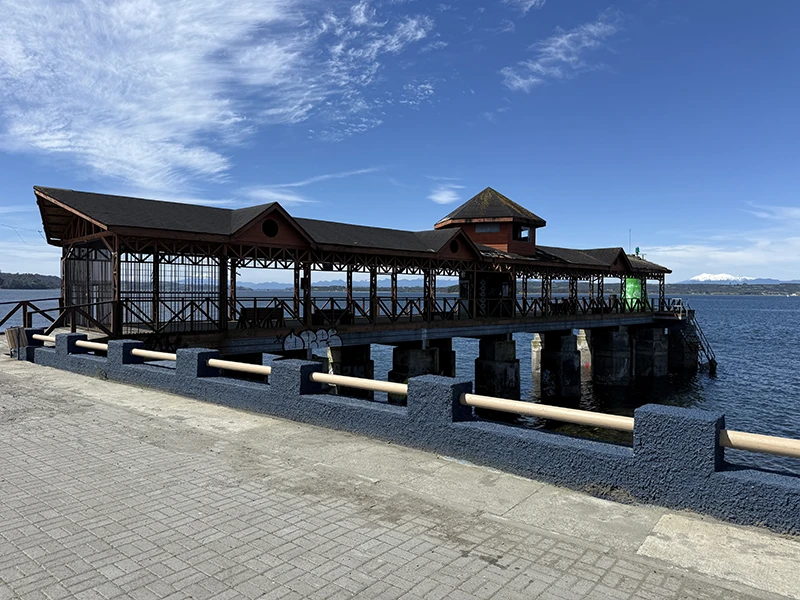
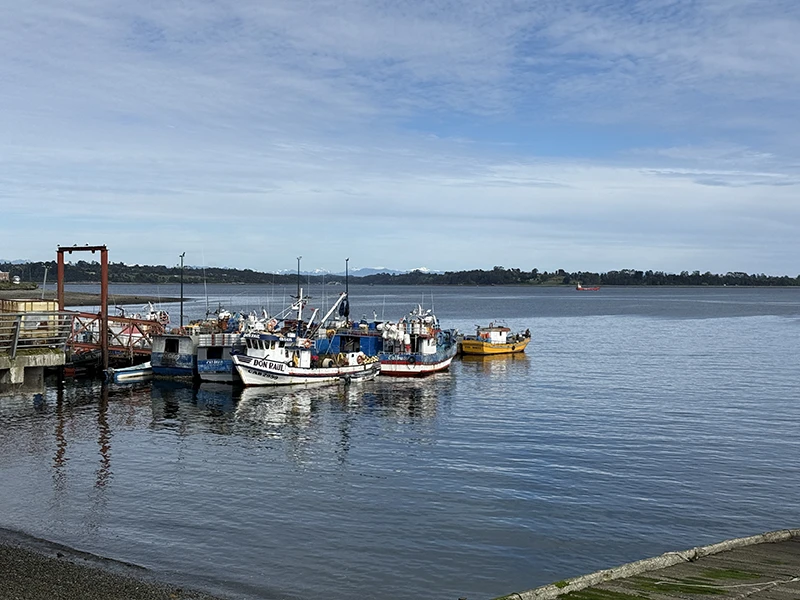
Calbuco’s relationship with the sea is inseparable from its way of life and its attractions. The city is also known as “the city of blue waters,” and offers multiple nautical activities. A must for visitors is a boat or boat ride through the interior channels, visiting some of the nearby islands. For example, you can navigate to Puluqui, Huar or Quenu, which have small localities where you can share with local communities, and even find rural accommodation services and restaurants of marine cuisine. The rich marine biodiversity (avifauna, sea wolves, occasional dolphins) is closely observed in these traverses and the unique island landscapes of Calbuco are appreciated. Another notable excursion is to Huapi Abtao Island, which in addition to its natural beauty houses the Monument al Vigía, located on a lookout hill where the defence batteries were held during the naval combat of Abtao in 1866. This island commemorates that historic event every year, receiving visitors especially every 7 February in the recreation of the naval battle.
Calbuco also offers unique cultural experiences. Among its traditional festivities is the “Fiesta de las Luminarias,” held every 28 September in honor of San Miguel Archangel, patron of the commune. On that magical night, the neighbors light fires, lights and candles on hills and shores, illuminating the island in the midst of songs and folklore music. This centenary tradition creates a show of lights on the sea that attracts locals and visitors alike. Other customary parties include the Curanto Gigante de Calbuco, a gastronomic event where this typical dish is prepared in large quantities, and religious celebrations of Chilean origin such as the Festival of the Caciques Indians on Easter of Resurrection, or the Feast of San Juan in June, which rescue legends and rites from the local folklore. The strong island identity and fishing tradition of Calbuco are also seen in its daily gastronomy: dishes such as seafood, shrimp empanadas, fried fish or the classic hole curing (prepared underground with brasses and pangue leaves) are part of the culinary offer that delights those who reach these lands. Eating in Calbuco is to discover fresh marine flavors and recipes transmitted by generations, reflecting a local economy based on artisanal fishing and aquaculture (especially the cultivation of choritos or mussels).
In short, the natural environment of Calbuco – its coastal landscapes, islands and rainforests – combined with its historical cultural heritage, make it an attractive and unique destination. Both adventurous tourists and new residents find in this commune a harmonious combination of scenic beauty, rural tranquility and interesting places to explore.
Health and education services
Despite its island and rural nature, Calbuco has a strong infrastructure of basic services for its community. In the area of health, the commune has a State-run Calbuco Hospital, which provides emergency care and primary care to the local population. In addition, the municipality operates an extensive primary care network: a Family Health Centre (CESFAM) in the city of Calbuco and about 19 rural poles distributed in different sectors of the commune. These posts – small local offices – are located in both continental areas and in the inhabited islands, ensuring access to basic medical services even in the most remote locations. In addition, there are medical-rural stations and care boxes at specific points, such as in Puluqui Island, Chidhuapi Island, Colaco and Huapi Abtao Island, as well as a new Community Family Health Centre (CECOSF) in Texas. Thanks to this network, the inhabitants of Calbuco can receive health controls, nursing care and referral to higher levels without having to travel long distances. It should be noted that municipal health coordination has implemented special programmes, including intercultural medicine initiatives for local indigenous communities and emergency transfer agreements, which strengthen health coverage in this fragmented territory.
In terms of education, Calbuco has a comprehensive education system in relation to its population, with the presence of establishments from the pre-school level to the middle school level. The Department of Municipal Education operates 45 public educational establishments in the commune. Of these, only 6 are located in the urban area (city of Calbuco) and the other 39 are distributed in rural and island sectors, reflecting the commitment to bring education to all corners of the archipelago. In total there are 41 basic (primary) schools, many of which are single-school or small-school on the islands, and 4 secondary schools. The latter include a Professional Technical Liceum (with specialties for technical training), a Scientific-Humanist Liceum of traditional training, and two complete liceos or schools that provide teaching from nursery to middle 4th. In addition to the municipal offer, the commune has a number of private subsidized schools that complement the coverage, mainly in the urban radio, which accounts for about 43% of the communal enrolment. There are no private schools paid, which indicates that education in Calbuco is essentially public or subsidized.
The presence of this school network ensures that children and young Calbucans are able to complete their studies without leaving the commune, except for those who choose higher education. In the case of technical or university studies, the city of Puerto Montt – at a short distance – offers universities, professional institutes and training centres, facilitating the educational continuity of the graduates of Calbuco. Within the commune, cultural activities and student support programmes, such as extracurricular workshops, sports and subsidized school transport for students in remote sectors, are also carried out. In short, Calbuco guarantees basic and medium quality education close to home, one of the important factors to make family life attractive in this territory.
Transport and connectivity
Thanks to infrastructure improvements in recent decades, Calbuco has ceased to be an isolated enclave to fully integrate into the region’s connectivity networks. The main milestone was the construction of the stone that links Calbuco Island with the continent, allowing direct vehicle and pedestrian transit. Through this route, the city of Calbuco is connected to Route V-85 and other secondary routes, linking further north to Route 5 South (Pan American Road). In this way, Puerto Montt – regional capital – is approximately 50 km away, a tour that can take around 40-50 minutes by car or bus, making the daily journey for work, study or other activities viable. The proximity to Puerto Montt also means relatively fast access to El Tepual Airport, the main air terminal of the area, located about 60 km from Calbuco. This represents an advantage in terms of national and international connectivity for the residents of the commune.
To the south, the municipality of Calbuco includes in continental territory the sector of Pargua, known as the point of embarkation of the ferries to the island of Chiloé. In Pargua, Route 5 ends and ferries that cross the Chacao channel to the large island of Chiloé continue to operate. This geographical location gives Calbuco a strategic role: a few minutes from the city, in Pargua, you can take a ferry that in 25-30 minutes arrives in Chiloé, opening the door to island Patagonia. Therefore, living in Calbuco means being connected to both the continent and Chiloé without further difficulty, which is an appeal to those who enjoy a variety of southern destinations.
Public land transport between Calbuco and nearby cities is well established. There are regular bus and minibus services that link the commune with Puerto Montt (with time frequencies throughout the day), facilitating the transfer of passengers. Within the commune, small rural and collective buses connect the city with localities such as Pargua, San Rafael, Caicaén and other sectors. For internal maritime connectivity, passenger transport boats operate to the inhabited islands. Several of these maritime routes have State subsidies, ensuring frequent low-cost tours for island residents who need access to the urban area of Calbuco or the continent. For example, there are regular services to Puluqui Island, Huar Island, Tabon, Queullin, among others, allowing the flow of people, students and goods. In recent years, new subsidized services have been opened, such as a modern boat for Huapi Abtao Island, significantly improving the communication of these isolated communities with the communal centre. Rampas and seagoing have also been built on several islands to facilitate safe boarding, demonstrating progress in territorial equity.
In the area of digital connectivity, Calbuco has made progress with the installation of telecommunications networks. Today it has mobile phone coverage in the main populated areas and Internet access, both through 4G mobile networks and fiber optic connections that have gradually spread. This allows the inhabitants to maintain communication and develop remote activities despite island geography. In addition, the commune benefits from government programmes aimed at bringing free WiFi to public places and rural schools, reducing the digital divide.
All these efforts in transport and connectivity have made it possible for Calbuco to no longer be perceived as a remote place. On the contrary, it combines the tranquility of island life with strong links to urban centres and surrounding areas. Both by land and by sea, Calbucans have safe means to travel, which encourages tourism and improves the quality of life of the local population.
A Territory with the Future
Calbuco is, in short, a place where living history, natural wealth and modern comforts converge. Its more than four centuries of history are reflected in fortines, wooden churches and unique festivities; its sea and forest environment offers dream landscapes and abundant natural resources; and its services in health, education and transport ensure a comfortable standard of living for its inhabitants. This commune of blue waters offers the possibility to enjoy life in a peaceful and community environment, without giving up connectivity with the rest of the country. Those who travel through Calbuco or decide to settle near this area find a welcoming and charming place, where the island tradition colives with progress, making Calbuco a privileged corner to live in the Los Lagos Region.